
I still remember the awful taste of thick, chalky pink medicine which I use to take in my childhood due to a deficiency of calcium in my body. It has no flavor but is sweet with a weird texture.
Because of my unfortunate health issues since childhood, I can understand the stress and pressure a child has while taking his medicine.
Similarly, the pressure is on their parents also as they have to look after the child’s health.
So here are nine tips you can use while medicating your toddlers.
9 tips for parents to give medication to toddlers
-
Use Different delivery methods
The method of giving the medicine may make all the difference in having your little ones take the medication. For instance, if they refuse to take medicine by spoon, you may want to try administering the medicine using a dropper or an oral syringe, that is, a syringe without a needle or in some fancy cup with a straw. Because of this stuff children get attracted and they surely won’t refuse to take the medicines.
-
Distract them
Distracting your little one is the best technique to use while giving medicines. When your child is occupied with certain activities and already distracted you can take the initiative to give them medicines.
-
Doctor Game
Most toddlers love Role-playing games, so you can play along with your child for a while and ask him to drink or take medicines while playing games. They will think it is a part of the game and take the medicine.
-
Avoid choking your child
Be mindful of how much your child can swallow at once to avoid choking. Sometimes, a dose should be divided into smaller parts. For infants and smaller children, always squirt the medication into the lower cheek rather than the back of the throat to prevent choking. Let your baby swallow before squirting in more. Medication should always be given in an upright or seated position to prevent choking.
-
Give rewards
If your little one refuses to take medicine, then you can encourage them with small incentives. Ask them to take the medicine and reward them with their favorite kinds of stuff.
-
Improvise the flavor
Few medicines can come in different flavors also you can sometimes improvise the medicine taste so your child agrees to take the medicine. Before doing that it is suggested that you talk to your doctor about it.
-
Teach the toddler to swallow pills
Big size medicines can lead to choking, so it’s better that you teach the easiest trick for swallowing pills. If the kid is not ready to swallow make small pieces or powder of the pills and mix them in milk and then you can ask your child to consume the medicine.
Before doing this, you can check with the doctor and later use this process.
-
Numb the taste buds
If the medicine is very bitter, the child will surely refuse to consume it. So the best trick that can numb the taste buds is like feeding them ice cream or an ice chip that can be more helpful for your child to eat.
Cold things help to numb the taste buds, this may be helpful for your child to consume medicines.
-
Give choices
When your little one is not keeping well, they lose their sense of control, so it’s helpful to give them choices. While taking medication is not a choice, you can give them simple options. You may ask your child for preference. You can also reward them with something if your child refuses to take the medicine.
We all have been through all this, sometimes it’s okay for a child to make tantrums and for you to handle them. After all their smile is what we care for!

Oh, she has gained weight!
Damn! She is too skinny.
Look what she is wearing.
We usually use this kind of statement but have you ever imagined what will be the impact on your kids when they hear something like this. As a parent, you need to make sure that your child learns to read and write yet we often assume children will naturally develop skills like kindness and empathy.
Most of the time kids don’t develop the skills of kindness by themselves, at a very young age, you need to help them to understand what kindness is!
Here in this article let us see what are the 5 simplest ways to teach kindness to your kids.
5 ways to teach kindness to your kids
- Teach Empathy
Empathy is basically an ability to imagine how someone else is feeling or what they are going through in a particular situation. Teaching empathy to your child will help them to understand others’ situations and how they should respond with care.
This is a complex skill to develop among children, so let us understand how to teach them empathy.
- Make them understand that others can have different thoughts and opinions than him.
- Make your child understand that every individual is different.
- What will be the right way to respond when someone is in a different situation?
- Share stories of kindness
Often kids love listening to stories and choose some books that have stories of kindness. There are many great stories you can choose from!
Stories are a powerful and highly influential way for kids to learn without direct teaching. Such stories will invoke their imaginations and help them understand what kindness means.

- Praise their Imagination
Kids have great imagination power, they might not be logical but praising their imagination will help enhance their dreams.
So now let us understand what praising exactly means?
- It’s very easy to notice bad habits of your children, but as a parent just noticing their bad behavior won’t help your child to grow at all. Rather than waiting for their disobedience and scolding them, you can appreciate their behavior or the small things they are trying to do.
- Let it be your child’s first drawing, or let it not be up to the mark, you can praise your kid so he gets the confidence to create more such things in a better way.
- Even the smallest thing they do can make a difference.
- Compliment when they achieve something new.
- Don’t let rudeness pass
Frustration can lead to anger, but never show your anger to your kid. They are yet young to understand what can be the reason behind your anger.
It is also possible that your constant way of showing anger can impact your child and similar behavior may be visible in your children.
- Play compliment games
It feels great to receive a compliment, let it be from anyone. The same goes for your children.
As per the research, it is found that the striatum, is activated in your brain when a compliment is received.
So next time, make sure you give compliments to your children!
The behavior of your child depends on your behavior, so make sure you encourage your child for doing good and you also make sure that you are doing well.
The transition from kindergarten to first grade is the biggest leap for a child. In kindergarten, your child was surrounded by a few kids, but from now onwards he will be with a number of students. Here your child will learn new things, play with several kids, eat, play with others and his routine will entirely change.
Here in this article, let us understand how to prepare your child for first grade.
Things your child should learn before entering First Grade
-
Reading Skills
Till the age of 5 or 6 your kids should have little reading skills before entering first Grade, So let us understand what all reading skills your kid should have:
- Recognize upper & lower case.
- Recognize and read numbers from 1 to 100
- Know the alphabet and basic features of letters and words.
- Memorize 100 or 150 spellings.
- Rhyming words.
- Read a parah of 100 words in one go.
-
Writing Skills
What all your child should write before entering First Grade?
- Write upper & lower case alphabets.
- Write & understand their and their family member’s name.
- Understand basic shapes and letters.
- Create simple 4 or 5 words sentences.
-
Fine Motor Skills
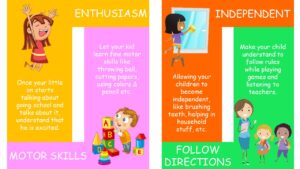
Fine motor skills are the ability to make movements using the small muscles in our hands and wrists. At the age of 5 & 6 your child should be prepared to do a few motor skills such as mentioned below:
- Hold a pencil, crayon, pen, scale in a correct way.
- Hold scissors in the right way.
- Able to cut with pieces of paper easily with scissors.
- Hold toothbrush and spoon easily.
- Brush their teeth easily.
- Pick their dishes after eating.
-
Mathematic skills
- Recognize Addition (+) & Subtraction (-) sign.
- Add & Subtract numbers from 1 to 10.
- Draw pictures to understand addition & subtraction.
- Count a little amount of money.
- Know numbers from 1 to 50.
- Understand shapes such as circle, square, rectangle, star, triangle, etc.
- Able to see the time on the clock.
-
Social Studies Skills
Here you can give basic ideas about our freedom fighters and history to your kids.
- Names of a few freedom fighters.
- Stories of independence.
- Date of independence.
- Year of independence.
-
Social Skills and Abilities
Along with studies your child should be involved in extracurricular activities.
- Participate in groups and other activities.
- Communicate appropriately and politely with other students & teachers.
- Respect elders and behave politely with them.
- Raise their hand before interrupting.
- Eager to learn.
-
Language & Listening Skills
- Understand and follow simple directions.
- Listen to others without interrupting, or raise a hand if they want to speak.
- Recite poems and songs.
- Asks questions whenever required.
- Understand their mother tongue and one other language. (Hindi, English)
- Distinguish between formal & informal language.
Preparing your child for further studies is necessary, therefore making them learn a few things at the right time is important. We at Tiddlee, make sure that your child learns several things that can help him grow mentally and physically.

This pandemic wasn’t so great for each one of us, there were a lot of ups and downs that gave us huge learning in our life. We came up with several things such as not moving out of the house for months, looking after household and office work at the same time, looking after your kids, cooking for them, helping them in studies, and many more.
Yes, all of this is difficult to manage.
Getting frustrated and giving up is not the solution, here are 5 tips that can help you to work from home with children.
5 Tips To Work From Home With Children
-
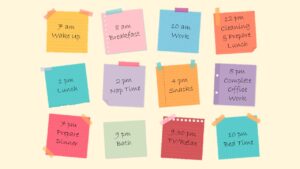
Create a schedule
It can be hectic to manage several things at a time, but it’s not impossible. You need to find some or other way to get rid of this hectic lifestyle. When it comes to managing your children and your work you need to know how to simplify it. The best way is to create a schedule, where you make sure you add every activity that needs to be done by your child. Creating an interactive chart will also help your child to follow the routine where you can manage things easily.
-
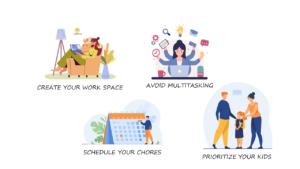
Set boundaries with your kids
Yes, your kids are important to you, but you need to contribute in a similar way to your work routine.
It’s necessary to set up boundaries with your kids, like when they can disturb you or what they need to do while you are doing your work. You can make some signboards that can be entertaining for your kids and they should follow the same.
-
Kids nap time is your work time
Usually, toddlers are willing to pay for the whole day. But along with that, they need good food and good sleep.
When they are wandering around you, it may be difficult for you to work at the same time. But when your kids are sleeping you can work properly. This time, you can easily complete your work without any distractions and interruptions.
In case, your little one wakes up you can keep him busy with some building blocks and other games.
-
Ask your other family members to help you
You can’t look after your kids all the time. Sometimes you might have to complete some urgent work, so at this time you can just tap into your other family members or ask them to look after your kids for a while.
You can ask their grandparents or your husband to look after them.
Meanwhile, you can complete your work and they can do a lot of stuff such as baking, listening to music, reading stories, etc.
-
Be gentle with your kids
It’s difficult to cope up with this situation, it’s not yours nor your kid’s fault. So getting frustrated, anxious, or depressed won’t help you either.
Your kids are your priority and they need you, so getting angry at them would not be a good idea.
So you should remain gentle and calm with your kids.
Make sure your kids get enough attention and love they need. Once your working hours are done, you should spend the entire time with your kids.
You are doing great!

At the age of 3 to 6 your child starts adapting things faster, This is the age when you can make your child follow a good routine that he can continue for the rest of his life. When your child is consistent and follows this daily routine they grow vigorously.
But how to create an effective timetable for your child?
Let us understand this in detail!
5 Tips to get your Child to Follow the Routine
-
Create your own routine first
Your child will learn from you!
So before setting up your child’s routine, you need to be consistent with your own routine. So what should you follow and how to be consistent?
Make sure that you have a lifestyle with a proper time schedule, such as having food on time, sleeping on time, cleaning your dishes, and other basic things that you want your child to follow.
Your child will start imitating you and they can easily adapt to the routine that you want.
-
Prepare a night before
To avoid delays you can wake up early or prepare the things at night itself. So you don’t need to worry about the next morning. Things that you can do at night are cutting vegetables, fixings your child’s shoes and backpacks, ironing clothes, deciding what you want to cook the next day, and preparing for the same.
This preparation will help you to manage things easily in the morning.

-
Make visual examples to explain your child
Kids are attracted to visuals, so for better understanding, you can make pictures and make your child understand their daily routine. Include all the things that you want them to follow, such as waking up on time, brushing their teeth, having breakfast, taking a bath, wearing clean clothes and brushing hair, packing their bags, and leaving for school.
Make sure you help your child whenever and wherever required.
-
Meal Times
Make sure your child’s first meal is healthy and tempting, which can make your child have a proper meal. Children usually don’t have their food properly, therefore you have to make something that will attract your child.
To make your child pay attention while eating you can also bring attractive spoons and plates for your kids.
-
Sleeping Routine
The morning routine can be followed by your child only when your child gets a good sleep. Your child needs a good amount of sleep, you can say 8 to 9 hours of sleep is necessary for your child. Don’t let your child watch movies or cartoons at night, this will affect your child’s health and eyes.
Your child is still learning, so as a parent, you need to be calm with your child. Let him take some time to learn and follow the routine. It won’t happen in a day or two, you just stay calm, connected, and consistent with your child.
It is difficult to trust a firm while you are enrolling your child in daycare or a preschool. The most important thing that comes to your mind is your child’s safety.
When it comes to engaging your child in an age-appropriate program, as a parent, you need to make sure that your child learns something good. In this, parents usually find it difficult to make quick decisions. Whether your child can cope with the separation, how can you place your child in a different and unknown environment, if you agree to allow your child in a Playgroup then how to find which Playgroup is safe?
While selecting a Playgroup or daycare for your child, you need to make sure that the environment is friendly and safe for your child.
Tiddlee makes sure that your child is in safe hands and our teachers will help your child to grow in every single activity.
Here in this article, let us understand how daycare or preschools are beneficial for your child’s growth.
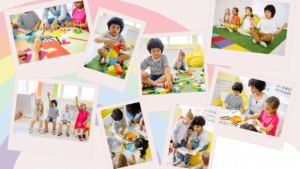
5 Reasons Why Preschool or Daycare is Good for Your Child
-
Encourages physical development
Physical activity helps your child to scale up the ability to learn, such physical development is known as Fine Motor Skills & Gross Motor Skills. Fine motor skills are the one that makes a child hold a pencil and learn to write as they grow older & gross motor skills are the body movements that allow kids to coordinate their actions.
Such physical activities improve the adaptability of your child and boost their self-confidence.
-
Preschool helps to adjust in kindergarten
Parents are always concerned about their child’s future. Allowing them into a preschool can surely make them capable to manage further studies, but they are also concerned about prematurity or what if your child grows too fast mentally. At the same time, they worry about the current trends to focus on pre-math and pre-literacy skills.
Therefore, while selecting a preschool you need to understand whether the staff that is going to take care of your child should know the particular ways to help your child to develop their skills.
In such preschools, the teachers will help your child organize time, space, activities that will help them to adjust easily in kindergarten.
-
Improves emotional and social development
A toddler needs to feel cared for and secure with a teacher or caregiver when he is away from his parents. Preschools such as Tiddlee look after your child’s development and make sure that your kid develops mentally and physically. Our well-trained caregivers provide high-quality programs that nurture the relationship with your child.
The staff helps children to learn social skills and emotional control that will help your child in higher studies.
-
Children can make a decision
Decision-making is one of the important skills that your child should learn. Teaching a kid is not just about making him learn new things, but also about controlling and helping take decisions whenever required.
In preschools, your child will be taught to make wise decisions whenever required. They will learn to engage with other kids within a short span of time, sharing things with other kids, learning what is right and what is wrong.
Such decisions will help to shape your child’s future.
-
They learn to take care of themselves
Apart from physical and mental growth socially, a child needs to take care of themselves. Therefore, in preschools or daycare, our caregivers allow your child to contribute to small things that will make your child a habit of doing small household stuff, for example – setting up the table, cleaning the desk, washing hands before and after eating, sharing things with other children.
As a kid they need to understand how they should behave with others, respecting their elders.
Schooling your child is the most important thing for their physical and mental growth. Allowing them in preschools may not be good for a few children, but it’s surely helpful for many.
 Not all kids
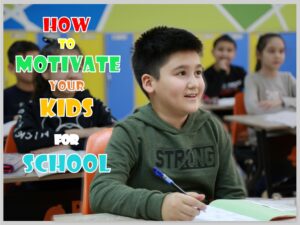
Not all kids love going to school, sometimes your kid needs some motivation if you want your child to enjoy schooling.
It’s a common problem these days, but most of the times parents approach this problem in the wrong way.
Here in this article, let us understand how to motivate and encourage your kids for school.
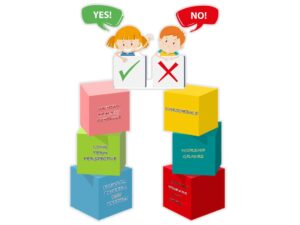
How to Motivate your Kids for School
-
Stay Positive With Your Child
Make sure you keep an open, positive & respectful relationship with your child and always keep them motivated. This will help your child to remain influenced and this is one of the important parenting tools.
Punishing or threatening your child will lead to nowhere, feelings of frustration, anxiety are normal as per your day-to-day lifestyle, but reacting to those of your child can make things worse. Your task is to make your child responsible not to spread negativity among your child.

-
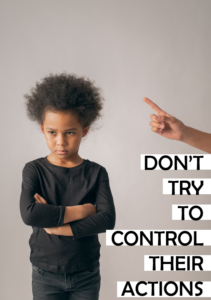
Don’t Try To Control Their Actions
You don’t need to control your child in all their actions, sometimes they can make mistakes and this will help them to learn through their mistakes. Your child needs motivation and when you entirely control your child’s actions they can feel a bit insecure or less motivated.
Managing your child is fine, but micromanaging will never lead your child to become responsible and take swift decisions further.
-
Emphasize The Process, Don’t Focus On Results
You need to motivate your child to do well, but you cannot force them to bring good results. Life is a journey where you have to learn things not to focus on the results. If your child is focusing on results and not on the process, then he may not achieve anything in the future.
Cultivate your children to love learning on their own and let them focus on the process, not on the result.
-
Focus on your child’s interests

If you really want to help your child, then you need to make sure that you let your child focus on their interests. Let your child explore topics or subjects that fascinate your child.
Let it be drawings, sports, reading storybooks, etc.
-
Make learning fun through game-based learning
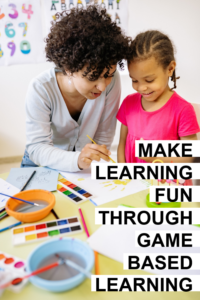
Why frustrate your child with studies, when you can make learning fun and enjoyable. Using games as an educational tool, not only will help you with opportunities for deeper learning. When your child is engaged with games his mind is more expressive and pleasures of learning new things.
Children usually try harder on games than in studies as the games are more engaging.
Children grow and develop rapidly in the first five years, also the Adaptivity is more during this period. There are four major areas of development, motor, physical, communication & language development.
Here in this article, let us understand the importance of developing motor & verbal skills in your child, also how can we help our children to develop their motor & verbal skills.
First, let’s understand what are motor & verbal skills.
What are motor skills?
Motor development is developing your child’s physical activities, it takes the help of your child’s brain and muscles to develop such skills. While developing their motor skills your child experiences several things.
This helps your child to enable the movements required for daily activities such as having food or moving from one place to another. There are two types of motor skills, Fine Motors Skills, and Gross Motor Skills.
Fine Motor Skills
Fine motor skills activities involve manual dexterity and often require coordinating movements of hands and eyes with the help of eyes. This is known as hand-eye coordination.
Below mentioned are examples of fine motor skills that occur at different stages of your child’s growth:
-
Birth to 3rd Months
- Using Arms to swing at objects.
- Move hands and brings them towards their mouth.
-
3 Months to 6 Months
- Transfers objects from one hand to another hand.
- Hold hands together.
- Reaches for objects using hands.
-
9 Months to 12 Months
- Puts objects in any container.
- Turns pages of newspaper or books.
- Tries to have food on their own.
-
1 Year to 1/1/2 Years
- Builds blocks.
- Claps
- Scribbles with crayons
-
1/1/2 Years to 2 Years
- Tries to write using crayons.
- Turns pages correctly.
-
2 Years
- Washes hands.
- Turns doorknobs.
- Plays with clay dough.
-
3 Years
- Folds papers.
- Recognizes basic shapes.
-
4 Years
- Gets dressed by themselves.
- Uses spoon properly.
-
5 Years
- Cut shapes.
- Holds pencil correctly.
- Tie shoelaces.
Gross Motor Skills
In Gross Motor Skills the large muscles are involved in an energetic and broader way of fine motor activity. This includes walking, kicking, jumping, or climbing stairs, let us see a few examples of gross motor skills below:
-
6 Months to 1 Year
- Roll over.
- Crawls.
- Stands easily.
- Sits without support.
-
1 Year to 1/1/2 Years
- Climbs on furniture.
- Pulls & pushes toys with wheels.
- Jumps with both feet.
- Walk upstairs with support.
-
2 Years to 3 Years
- Rides Tricycle using peddles.
- Runs without falling.
- Throws a ball.
-
3 Years to 4 Years
- Catches a ball with two hands.
- Changes speed and runs easily.
- Climbs upstairs using stairs easily.
-
4 Years to 5 Years
- Hops on one foot.
- Kicks the rolling ball.
- Rides, bicycle swiftly.
- Throws and holds the ball easily.
What are verbal skills?
Verbal skills include the ability to understand the language easily. This skill includes understanding grammar, multiple languages also the creative way of language used in poetry.
Signs of Verbally Gifted Kids
- Learns to talk fluently.
- Begin reading before peers.
- Using advanced vocabulary at their age.
- Communicate the story with ease.
- Ability to learn other languages easily.
- Enjoys verbal games and puzzles.
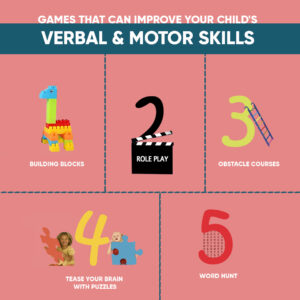
Games that can develop your child’s verbal & motor skills
Learning is never enough, but the period of 1 to 5 years is when your child starts grasping things easily. Some interesting games can help to develop your child’s verbal & motor skills.
-
Building Blocks
This is one of the basic games that evolved over the years and never faded out, even we loved to play with blocks in our childhood. This game or activity helps to build up the creativity level of your child. All you need is a set of blocks with different colors and shapes.
-
Role Play
Role Play is the games like teacher – teacher, doctor-doctor that we usually played in our childhood. Here the options are endless and also with a vast imagination level.
This is the best way to improve the creativity and imagination level of your child.
-
Maze
You can create some easy hurdles for your kids, where your child will have to find a path to exit. Such games will help your child to improve their problem-solving abilities to think out of the box.
-
Word Hunt
Using blocks, flashcards or alphabets you can form different words, ask your child to match the words, and create a new word. This will improvise your child’s alphabet recognition and boost memory as well.
-
Simon Says
Simon says is the most creative game where you can ask your child to follow different things, such as touch their feet, tap some color, finds some color, go and get some object, etc. This will help your child to stay active and boost his memory also improve his listening and interpretation skills.
Your child is in a learning stage, do not force him to do anything that is taking time. Regular practice and your love for them will help your kids grow. Let’s make your child’s life the best phase where he enjoys learning new things.
No!
Give it to me!
Its Mine!
You must have heard these words from your toddlers often, Isn’t it?
Do not worry, it’s quite normal, not just your child, but every child does the same thing. Teaching kids to share something they don’t want to give up can be a daunting task, but it can be done.
Here in this article, let us see how we can teach our children to share.
How to Teach Children to Share
-
Set a Good Example
No one else but you are your child’s role model. 80% of things that your child does come from you or your behavior. So if you want your child to learn, then you have to implement this in your behavior. For example, if you are snacking something, then share a bit with them. Your child will learn from you, so at first, you start sharing things in front of them and tell them the benefits of sharing.
-
Help them to understand what is Sharing
Nobody wants to give their things to someone else, but as a grown-up, we know the importance of sharing. Similarly, your child is just 1 or 2 yrs old, it’s your responsibility to make them understand what sharing is and its importance.
If your child is not ready to share things, you can set a timer where you can ask your child to give their stuff for a while and take it back after some time. By this, your child will not be more worried about his things.
-
Don’t punish, but make him understand
It is embarrassing when your child shows tantrums to some other kid or he snatches away his teddy from another child. Yes, it’s obvious that you will be embarrassed and angry!
But during this time you need to remain calm and make your child understand that the way he reacted was rude. At that moment, if you force your child or scream at him, he will surely find that sharing has negative consequences.
-
Appreciate your child
Your child needs nothing but your support and appreciation. Noticing him and appreciating him on small things will keep him motivated. So if you see your child doing something good, do not hesitate at all to appreciate your child there and then.
Your child is very young to understand things at this point, let them take their time and understand all this stuff. At first, they will be stubborn, but later he will understand the importance of sharing once they are mature.
Remember the carefree days of our childhood?
Weren’t they amazing?
Every day was a new experience and adventure, full of learning and discovery.
Being an adult is a great thing, but adulting comes with responsibilities and tough decisions. Childhood is all about fun, creativity, and learning, but the most important thing that a child has and we adults lose easily is “Confidence”.
Most of the children are confident and show each of their activities, but it is possible that some children may not have this quality. So it is your responsibility to build up this quality in your child.
So now the question arises, how to build confidence in your child?

Here in this article, we will see 30 inspiring life lessons that will be helpful to make your children confident.
30 Inspiring Lessons That Make Children Confident
- Life is not all about books and learning.
- Every day is a fresh start.
- Creativity is good for your mental growth.
- Be courageous.
- Keep a smile on your face.
- Be Active, Stay Smart.
- Nurture friendship.
- It’s okay to fail sometimes.
- Always welcome new things.
- Practice positive self-talk with children.
- Honesty is the best policy.
- No matter how bad things are going, something good is out there.
- Start enjoying every little thing in your life.
- Stay unique and different.
- All the dreams can come true if you have the courage.
- It’s the will not the skill.
- Remember, you are braver.
- Try your best.
- Know better, to do better.
- Never look down on anybody.
- Life is the best teacher.
- Learn how to think, not what to think.
- Dream before to let them come true.
- Make each day a masterpiece.
- Life is better when you are living in the present.
- You are amazing just the way you are.
- Keep your mind free.
- Believe in yourself.
- Always think about creating.
- Kindness is better than force.
Parenting involves taking care of their children and granting them basic comfort, along with this as a parent you should also prepare your child mentally.
In today’s world, confidence is the most important thing to sustain in life.